Understand what is really happening in your pipeline, your sales process, and your team performance before deciding what to change.
Sales performance problems are rarely obvious. Pipeline looks strong, activity is high, and forecasts appear confident, yet results fall short.
Deals stall late, opportunities are lost for unclear reasons, and different people have different explanations for what is going wrong.
Many organisations respond by changing tools, introducing training, or adjusting targets. But without a clear diagnosis, these changes often address symptoms rather than causes.
Sales effectiveness consulting helps you understand what is really happening, identify what matters, and decide what to do next with confidence.
When Sales Effectiveness Consulting Is the Right Choice
This type of consulting is most valuable when there is uncertainty about the cause of performance issues or when previous initiatives have not delivered the expected results.
- Pipeline coverage looks healthy, but revenue outcomes are inconsistent
- Forecasts are regularly missed or unreliable
- Opportunities progress slowly or stall late in the sales process
- Sales activity is high, but conversion rates are low
- Performance varies widely between salespeople
- CRM data is available, but it does not explain what is really happening
- Previous changes (training, hiring, systems) have not resolved the issue
If you already understand the problem and need support with implementation, see our sales enablement services.
If you want a structured way to review your current position first, you can also use the sales effectiveness assessment.
Why Sales Performance Problems Are Often Misdiagnosed
Sales performance issues are frequently misunderstood because the visible symptoms do not always reflect the underlying causes.
- CRM data shows activity, but not deal quality or risk
- Late-stage losses are often caused by early-stage qualification issues
- Salespeople report optimism, while underlying issues remain unaddressed
- Training is applied to skills gaps that are not the real constraint
- Managers focus more on pipeline volume than progression and conversion
Without a clear diagnosis, organisations risk investing time and resources in changes that do not improve results.
What Sales Effectiveness Consulting Examines
Sales effectiveness consulting does not start with solutions. It starts by examining how sales performance is actually being created, measured, and managed.
Depending on the situation, this may include:
- How opportunities are qualified, progressed, and reviewed
- The alignment between your sales process and your customer’s buying process
- Pipeline structure, progression, and conversion patterns
- Where and why opportunities are lost or delayed
- How forecasts are built and where risk is introduced
- The effectiveness of sales management and deal oversight
- How CRM data reflects (or obscures) reality
This analysis provides the clarity needed to identify what is actually driving results and where change will have the greatest impact.
Understanding Sales Process and Pipeline Performance
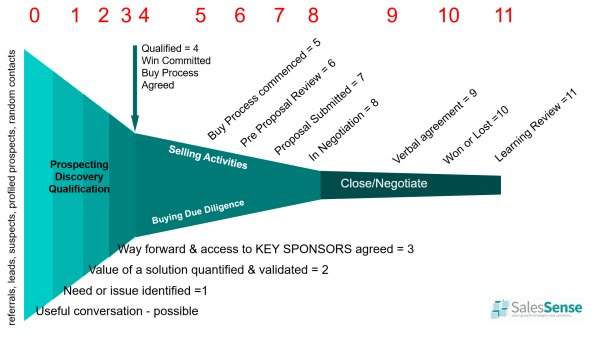
In some cases, the findings lead to changes in the sales process, pipeline management, or measurement. In others, the issue lies in how opportunities are qualified, how decisions are made, or how sales activity is focused.
The objective is not to apply a standard model, but to identify the specific factors that are affecting performance in your business.
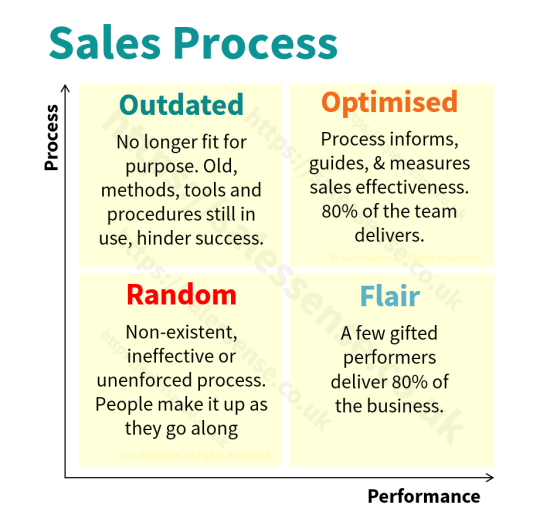
As part of sales effectiveness consulting, we examine how your current sales process, pipeline structure, and measurement approach are working in practice.
Sales Process and Buying Journey Alignment
We review how your sales stages reflect the way customers actually make decisions. In many cases, pipeline stages exist, but they do not accurately represent buying progress or risk.
This can result in opportunities appearing further advanced than they are, leading to late-stage delays or losses.
Pipeline Progression and Conversion
Pipeline performance is analysed to understand how opportunities move between stages, where delays occur, and where conversion rates weaken.
This helps identify whether issues are caused by early-stage qualification, mid-stage progression, or late-stage decision-making.
Use of CRM and Sales Data
CRM systems often contain large amounts of data, but this does not always translate into meaningful insight. We assess how accurately CRM data reflects reality and whether it supports effective decision-making.
In some cases, reporting focuses on activity levels rather than deal quality, risk, or progression.
Sales KPIs and Performance Measurement
We review how sales performance is measured, including the use of stage-based KPIs, conversion metrics, and forecasting inputs.
This helps determine whether current measures provide a clear view of performance or whether they obscure underlying issues.
The objective is to ensure that the information available supports accurate judgement and better decisions, not to introduce additional complexity.
What You Get from Sales Effectiveness Consulting
- A clear diagnosis of what is affecting sales performance
- Identification of the most important issues to address
- Practical recommendations based on your current situation
- Greater confidence in sales decisions and priorities
- A defined direction for improvement, whether through internal action or further support
From Analysis to Action
The findings from this analysis do not always point to the same type of solution.
- In some cases, changes to the sales process or pipeline management are required
- In others, the issue lies in qualification, deal strategy, or sales behaviour
- Sometimes the main constraint is how sales activity is managed or prioritised
The purpose of sales effectiveness consulting is to identify the specific factors affecting performance so that any changes are focused, relevant, and effective.
Example: When Pipeline Strength Doesn’t Translate into Results
A B2B technology company had strong pipeline coverage and high levels of sales activity, but consistently missed forecasts.
The initial assumption was that more pipeline was needed. However, analysis showed that the issue was quality and progression, not volume.
- Opportunities were entering the pipeline without clear qualification
- Sales stages did not reflect the customer’s actual buying position
- Deals appeared advanced but lacked real commitment from decision-makers
- Late-stage losses were caused by issues that should have been identified earlier
By clarifying qualification criteria, aligning sales stages with the buying process, and improving opportunity review, the business improved both forecast accuracy and win rates without increasing pipeline volume.
This type of situation is common. The visible problem is often not the underlying cause.
Discuss Your Sales Situation
If your sales performance issues are unclear, inconsistent, or not improving despite previous changes, a short discussion can help clarify what may be happening.
We can review your current situation, explore the likely causes, and help you decide what to do next.
Arrange a video call or telephone 01392 851500.
Frequently Asked Questions About Sales Effectiveness Consulting
What is sales effectiveness consulting?
Sales effectiveness consulting helps organisations understand what is affecting their sales performance and identify the most effective actions to improve results. It focuses on diagnosis, analysis, and decision-making rather than immediate implementation.
When should we use sales effectiveness consulting?
It is most useful when sales results are inconsistent, forecasts are unreliable, or previous initiatives have not worked. It is particularly valuable when the cause of performance issues is unclear.
How is this different from sales enablement services?
Sales effectiveness consulting focuses on understanding and diagnosing problems. Sales enablement services focus on implementing changes once the required actions are clear.
How quickly can issues be identified?
Initial insights are often identified quickly, particularly where patterns exist in pipeline, conversion, or sales behaviour. More complex situations may require deeper analysis.
Do you work with our existing CRM and sales process?
Yes. The objective is to understand how your current systems and processes are working in practice, rather than replacing them unnecessarily.
If the causes of sales performance issues are unclear, our sales effectiveness consulting services will expose the problems and identify practical solutions. Arrange to speak with Clive Miller or telephone +44 (0)1392 851500. Alternatively, send an email to jimm@salessense.co.uk or use the contact form here.